
The Photocopy Problem: Why AI Is Flattening B2B Storytelling
Apr 21, 2026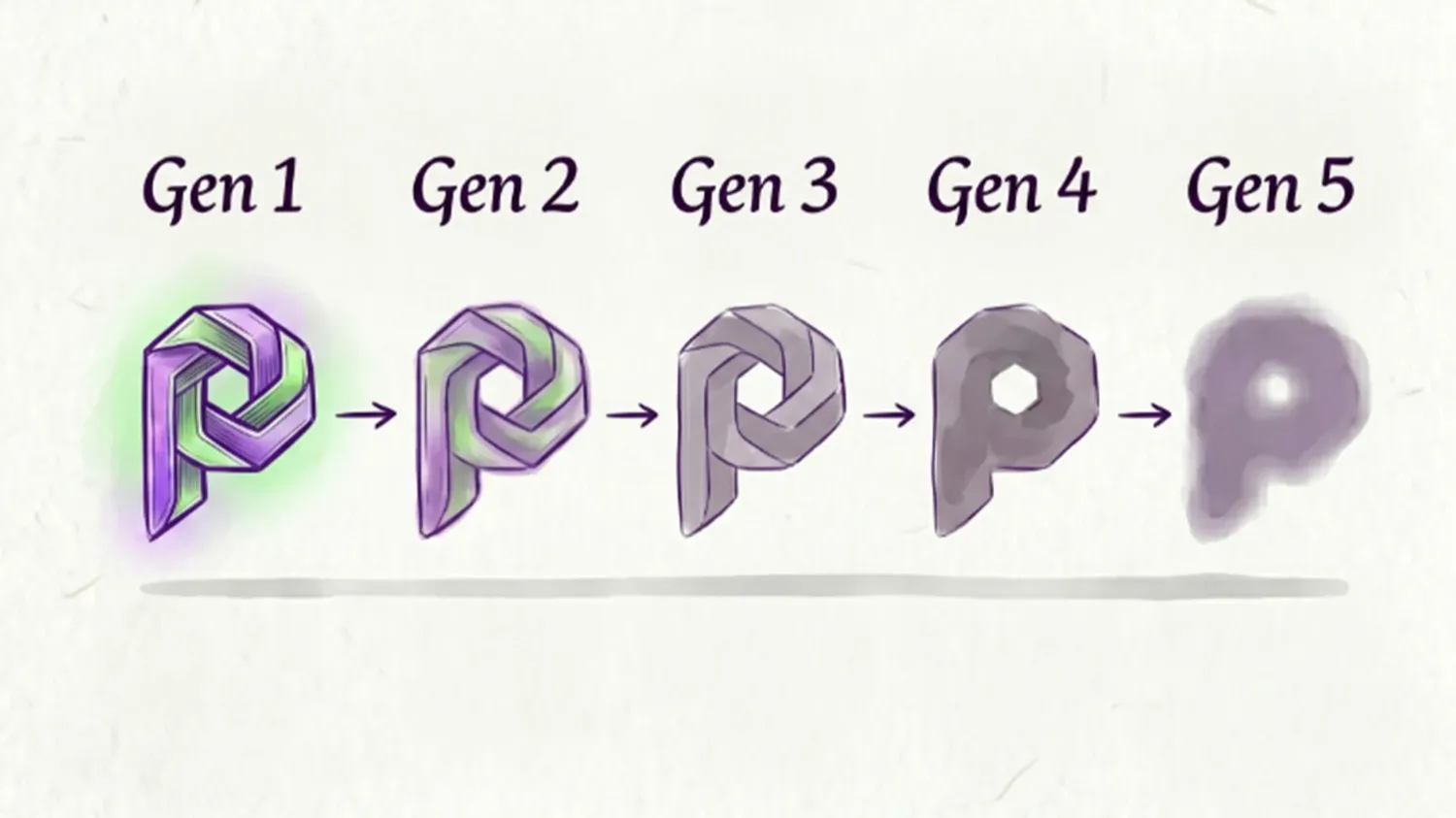
Model collapse is here and it is eating your brand from the inside.
LinkedIn is a sea of sameness right now.
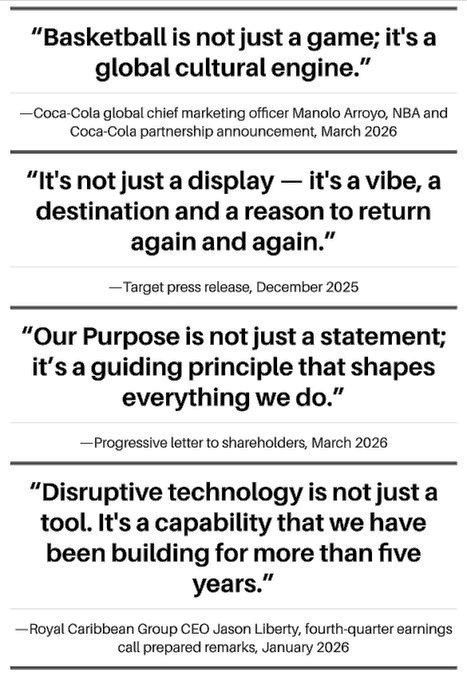
“It is not about marketing, it’s about storytelling.”
“It is not about features—it’s about outcomes.”
“It is not about selling. It’s about serving.”
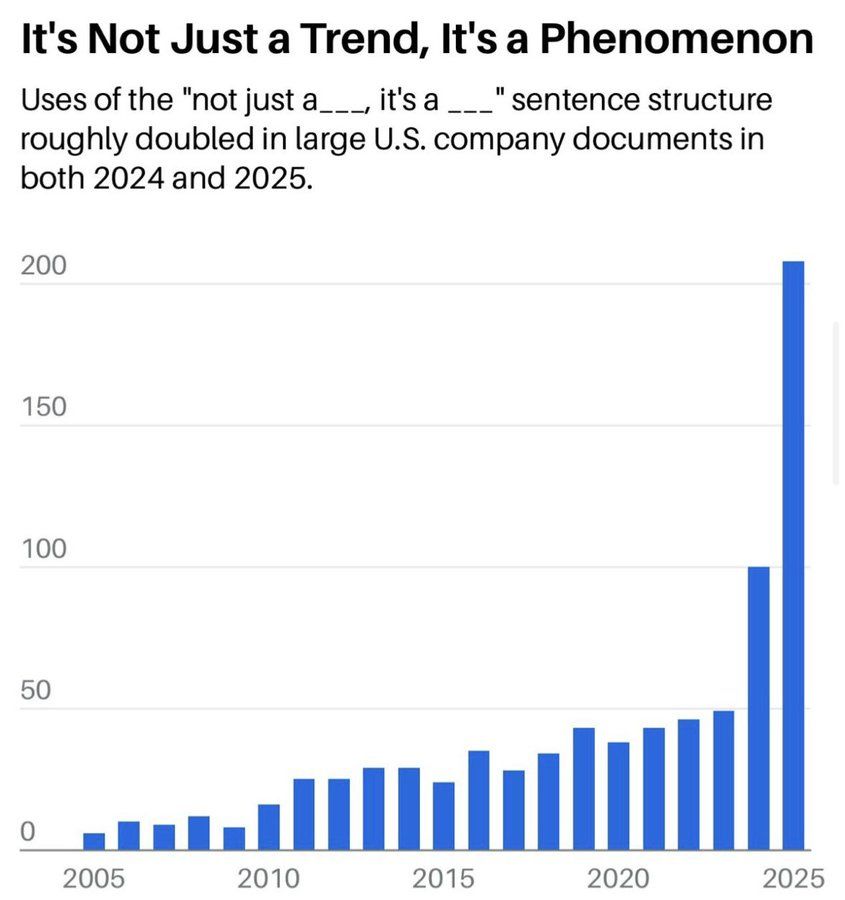
You see it day in, and day out. You probably scrolled past three of them today. They all have the same cadence and the same fake profundity. They use staccato line breaks that feel urgent but say nothing.
This is what happens when everyone uses the same tool with no strategy behind it. The output converges. The voice disappears. Nobody can tell one brand from another.
You may assume this is largely just happening on LinkedIn, but it’s far worse. This AI trope and many others are showing up everywhere.
And writing is just the most obvious symptom, like a headache signaling to a deeper, underlying problem.
The same thing is happening in design and brand identity. The consequences there are much more expensive.
Don’t fall prey. Learn how to let your story shine.
The Average of the Internet
Ask AI to design a SaaS landing page and you will get a wash of sameness every time. San serif font. Blue-ish gradients. Three column feature grid. A hero section that could belong to any company in any industry selling anything.
An Adobe study found that 42% of AI generated interfaces share the same navigation structure and components. No, not similar. The exact same.
That's crazy.
People think they’re getting a design tool replacing a designer, because they can see the output. In truth? This is more akin to being a median calculator, simply yielding the mathematical average of every website it has ever seen.
Sure, the output looks professional and polished.
It just does not look like you.
The good part? It doesn’t look like your competitor either.
It can pass for anyone and stands for no one. That makes this worthless as a brand asset.
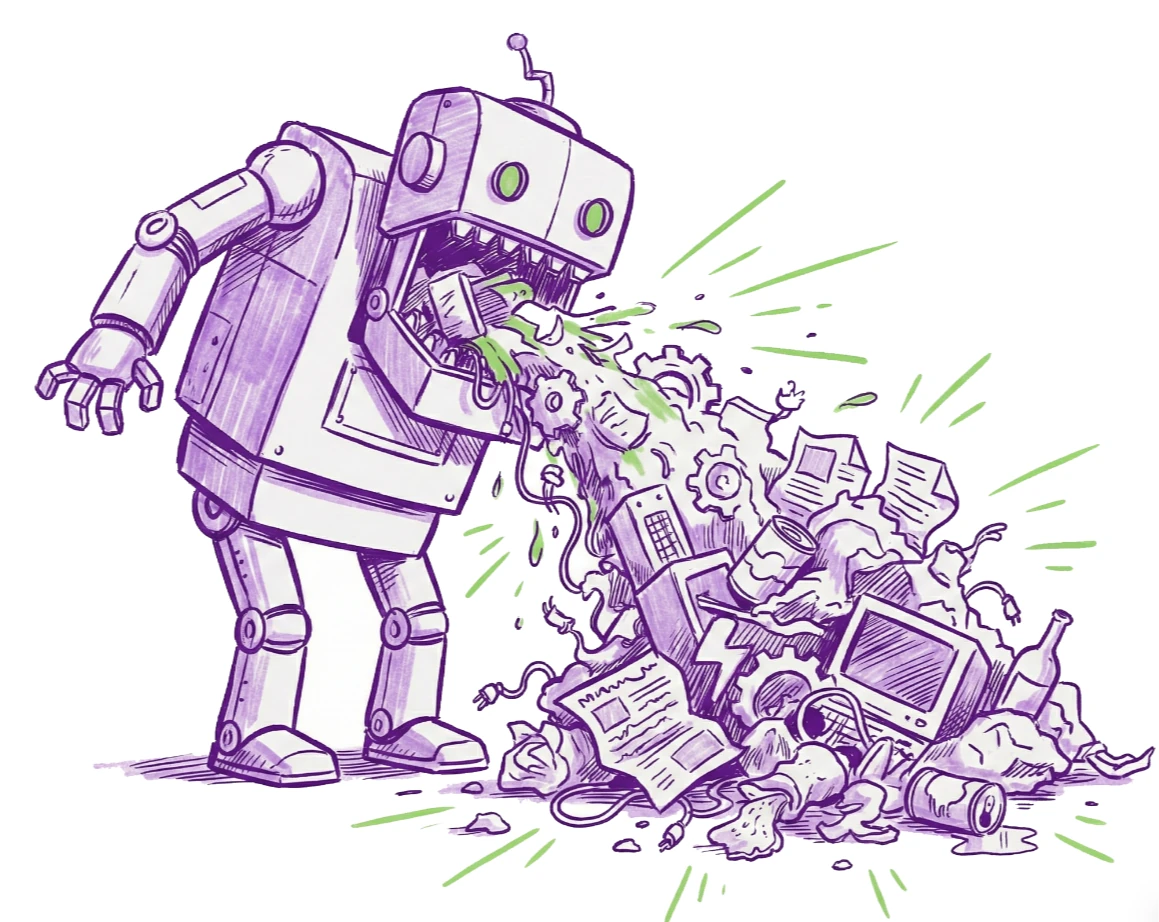
We see the same verbal patterns repeating. Phrases like “In an era of” or “But here is the thing” are everywhere. It’s called AI slop. It is predictable white noise. The patterns are easy to spot: SaaS blue, the floating dashboard screenshot, and the three tier pricing table. You know exactly what I am describing because you have seen it—a lot lately.
The Photocopy of a Photocopy
Here is why this is getting worse. AI models train on what is published on the internet. As of 2025, roughly 74% of new web pages contain AI generated material. The models are increasingly training on their own output.
Researchers at Oxford and Cambridge published a study confirming what happens next. Each generation of recursive training loses the tails of the distribution. The rare stuff and the differentiated stuff disappear first. What survives is the average.
They called it “model collapse.”
Think of it like a photocopy machine. You copy the original and the first copy looks fine. Then you copy the copy. By the tenth generation, the image is flat and unrecognizable. The details that made the original worth copying are gone. Each new copy looks like a muddy mess and nothing like the original.
That is what is happening to AI output right now. Every generation gets flatter. Every cycle produces more of the same. Because the volume of AI generated content is accelerating, this feedback loop is compressing faster than most people realize. AI is converging on the mean and dragging every brand that relies on it toward the center.
The Debt Nobody is Talking About
Most companies see AI as a cost savings. They cut $80K from a design budget or produce 10x the content with the same team. The math looks great on a quarterly slide. But they are taking on two kinds of debt they have not accounted for:
- UX debt. Every shortcut in design compounds. A layout that works fine but was not built around actual user behavior creates friction. Cheap AI wins today become expensive redesigns tomorrow when you realize the UX designer never accounted for your unique sales propositions, client pain points or human behavior.
- Epistemic debt. This is a loss of knowledge about your own system. When AI generates your messaging, your team loses the institutional memory of why those decisions were made. There is no strategic logic to build on.
You cannot iterate on decisions you did not make. You can't improve what you can't explain. When the market shifts and you need to reposition, you are starting from zero. Your brand was never built on narrative infrastructure. It was generated.
Then there is review fatigue. AI produces at machine speed while humans review at human speed. Teams start rubber stamping output because the volume overwhelms them. Narrative drift and messaging fractures slip into production because nobody is actually evaluating anymore.
What makes us human should be more than the ability to hold a rubber stamp of mindless approval.
AI Extrapolates but Struggles to Differentiate
This is the line that matters. AI is exceptionally good at extrapolation. Give it a pattern and it will extend that pattern at scale. It gives you more of the same, faster and cheaper.
But differentiation requires something AI doesn't have. It requires context about your specific customer. It requires taste about what your brand should feel like versus what is statistically popular. It requires strategic judgment about what to say and what to deliberately leave out.
These are upstream decisions. They happen before the content gets created and before the design gets built. They require a point of view.
The companies that will compound brand equity over the next three to five years are the ones that make these decisions first. They use AI to scale those decisions, not to skip them.
There will always be companies that prefer cheap over good. They will generate their landing pages and LinkedIn posts from the same tools as everyone else. Instead of wondering why their conversion rates are low, they will focus on scaling impression volume.
The companies that understand brand as a compounding asset know differentiation is the only durable advantage. They are moving upstream. They are investing in the strategic work first and using AI as the execution layer.
The Upstream Fix
Of course, the answer is not to stop using AI. We are still going through an industrial revolution-like moment. Brands ignoring that will become the companies that ignored the steam engine.
The answer is one that few seem to want to discuss: It’s to stop using AI as a substitute for thinking.
Brands have to: Build the narrative first. Define the positioning. Lock the messaging framework. Make the hard decisions about who you are and what you are willing to say that your competitors will not. Have uncomfortable conversations. Decide what you want to be. Who you are. And why someone should give a damn about your brand.
Then scale it.
You should be putting AI downstream from the real work, not in place of it. That is how you stay differentiated while the rest of the market collapses toward the center. Let everyone else photocopy their brand.
Our AI content creation tool Premise functions with this exact recipe in mind. Premise is not making decisions on what your story should be, mindlessly carbon copying the internet.
Instead, Premise scales the story. It keeps the content your team generates on narrative. It is a private copywriter that understands your strategy. Premise operationalizes your human-generated story.
The brands that figure this out early will own their categories through differentiation. The brands that do not will spend the next five years looking, sounding, and feeling exactly like everyone else. They will compete amid high saturation, fighting for more impressions instead of making an impression.
You have a golden opportunity to set the story straight.
We start this process with Storytelling Discovery Audits.
Find Your Story's Premise

