
AI Brand Voice
What It Is and How Teams Keep AI Writing On Brand
Your brand voice is not who you are. That's messaging. Voice is how you say it. The best voice work is so distinctively unique to your brand, you can take the name and logo off the page and still know who said it.
For years copywriters defined brand voice, and it mostly took a copywriter to execute it well. That’s changed with AI, which while solving one problem has opened up a host of others.
“AI brand voice” is when you create AI-generated content to sound like your company’s voice. It covers the rules, examples, and systems a team puts around AI writing tools so that output matches how the brand actually talks, whether the person prompting is the founder or the newest hire.
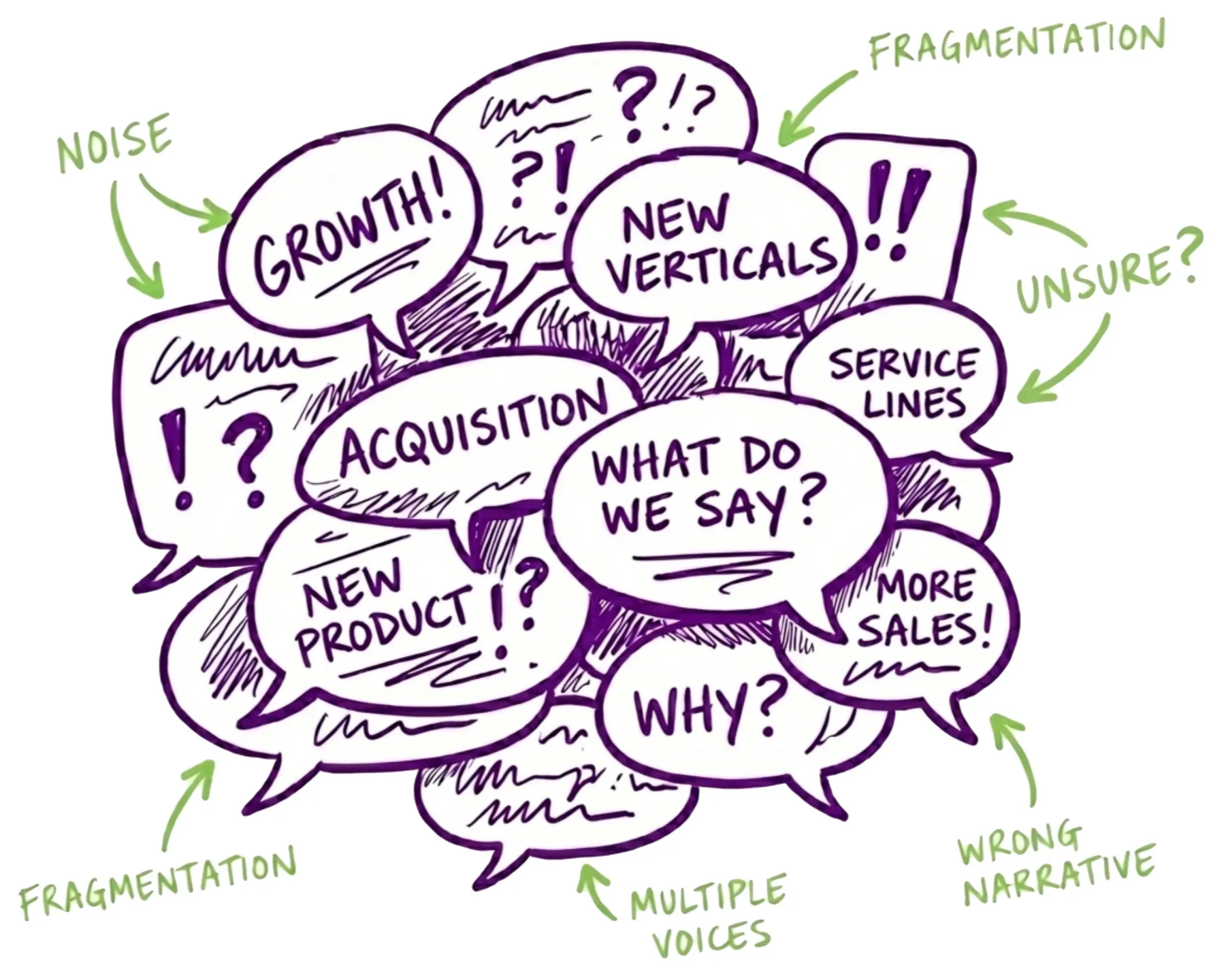
The term gets used two ways. Tool vendors use it to describe a feature: upload a style guide, get output that loosely imitates it. Teams that produce a lot of content use it to describe a discipline: a maintained set of voice rules that every piece of AI-assisted writing passes through. This page covers both, and explains why the gap between them is where most on-brand AI efforts fail.
Why AI writing drifts off voice
Large language models (LLM) are trained on most of the written internet. Left alone, they write like an average of it. That average has a recognizable sound and pattern because that’s at the core of how an LLM works—patterns. Readers have learned to spot it.
-
Antithesis constructions. "It's not just a tool, it's a philosophy." What was once a great tool in use of juxtaposition has become an instant AI red flag. AI reaches for this contrast pattern constantly because it reads as insightful without requiring an actual insight. It’s just a comparison.
- Em-dash chains. While the em dash is also a great arrow in the writer’s quiver, many have become sensitive to it because AI loves it. Multiple em dashes per paragraph, used as an all-purpose connector? Probably AI.
- Hedging openers. "In today's fast-paced digital landscape..." This was always bad copy, and now it’s bad AI copy.
- Inflated vocabulary. Elevate, seamless, unlock, delve, robust, leverage. Most brands shouldn’t write like this. “Write like people talk.”- David Ogilvy, the godfather of modern advertising.
- Symmetrical closers. Every piece ends with a tidy three-part summary and a call to imagine the future. AI loves the trinity.
None of these are wrong in isolation. The problem is frequency. A brand that publishes AI-assisted content without controls starts sounding like every other brand doing the same thing, because they're all drawing from the same default voice.
This is the core problem AI brand voice work solves: the model's default is everyone's default. Your voice is whatever you can define clearly enough to enforce.

What an AI brand voice system includes:
Teams that keep AI writing on brand consistently tend to have the same five pieces in place, whatever tools they use.
- Voice rules. Specific, enforceable instructions about how the brand does and doesn't write. "Sound confident" is a mood, not a rule. "Never open with a question. Never use more than one em dash per page. Don't use contrast framing like 'it's not X, it's Y'" are rules. A model can follow them, and an editor can check them. This should be standard in messaging work.
- Real examples. Passages of actual brand writing the model can pattern-match against. Rules tell what to avoid; examples show what good looks like.
- Vocabulary decisions. Words the brand uses, words it never uses, what it calls its own products. This is where most drift shows up first.
- Company knowledge. Voice without substance produces well-styled filler. The model needs access to what the company actually knows: its positioning, its point of view, its customer language. A brand voice system that only styles text will faithfully produce on-voice content that says nothing. This is typically layered with a great messaging framework.
- An enforcement point. Somewhere in the workflow, the rules actually get applied. This is the piece most teams skip. A style guide sitting in a shared drive governs nothing.
The common approaches, and where each one breaks.
Prompting. Pasting voice instructions into ChatGPT or Claude works for one person, once. It breaks with teams: everyone maintains their own prompt, the prompts drift apart, and the voice fragments. There's no shared source of truth.
Custom GPTs and projects. A step up. The instructions live in one place. But the voice logic is trapped inside one tool, one chat interface, and usually one person's account. Onboarding a team means hoping everyone uses the right custom GPT the right way.
Brand voice features in AI writing tools. Jasper, Copy.ai, and Writer all offer some version of this: upload samples or a style guide, and the tool analyzes your voice and applies it. These features are real, but they mostly work by imitation. The tool infers your voice from samples rather than enforcing explicit rules, so the output inherits your surface style while keeping the model's underlying habits. The antithesis constructions and inflated vocabulary come back, dressed in your fonts. What’s better is a tool that actively learns your brand through asking you, the human, vs. just looking at what’s been done. Reviewing existing copy assumes the copy was previously done well. Tools like Premise are better for actively creating and maintaining rules for AI.
A voice layer. The approach built for teams: an explicit, maintained ruleset that sits between the model and every piece of output, combined with the company's knowledge base, shared by every user. Rules are written down, versioned, and applied on every generation rather than inferred from samples. This is the category Premise is in, and the distinction that matters most when comparing options.
Brand voice feature vs. voice system
A quick way to tell which one you're evaluating:
- A feature infers your voice. A system enforces it.
- A feature lives inside one tool. A system is the source of truth your whole team generates from.
- A feature styles text. A system also carries what your company knows, so the content is right, not just right-sounding.
- A feature is set once. A system gets maintained, because voice rules evolve as you catch new failure patterns.
If your team is three people writing occasional social posts, a feature is could be enough. If content is a core function for sales, and multiple people generate it weekly, the feature approach is how you end up with four slightly different versions of your brand.
Signs your AI content is off voice
Worth auditing your last month of published content against:
- You can tell which pieces were AI-assisted without being told.
- Different team members' AI output sounds like different companies.
- The writing is grammatically flawless and completely interchangeable with a competitor's.
- Your brand's actual opinions are missing. The content is agreeable about everything. Brands should stand for something. Much AI copy sounds like nothing in particular.
- Editors spend more time rewriting AI drafts than they'd spend writing from scratch.
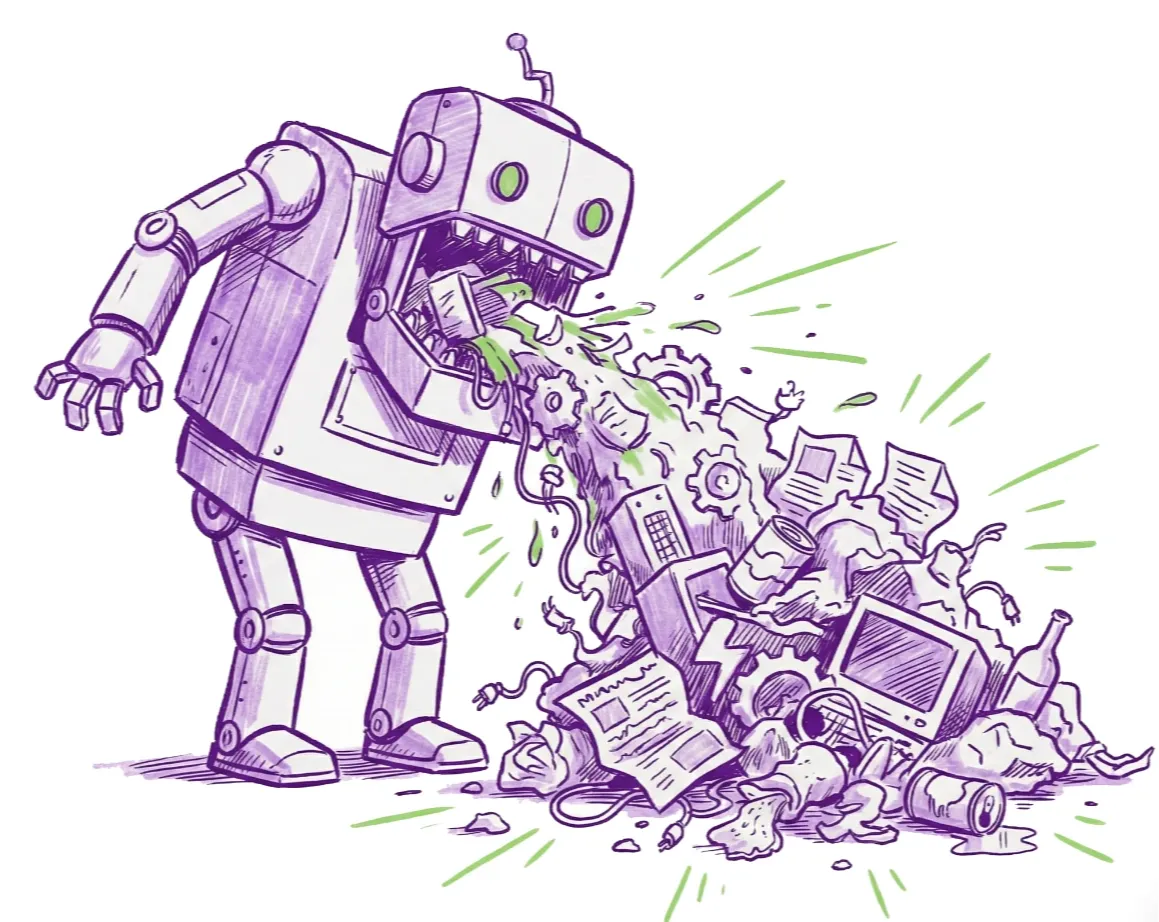
That last one is the quiet killer. Teams adopt AI to move faster, then spend the savings sanding the default voice off every draft. A working voice system moves the sanding upstream, into rules, so it happens once instead of every time.
How Premise handles this
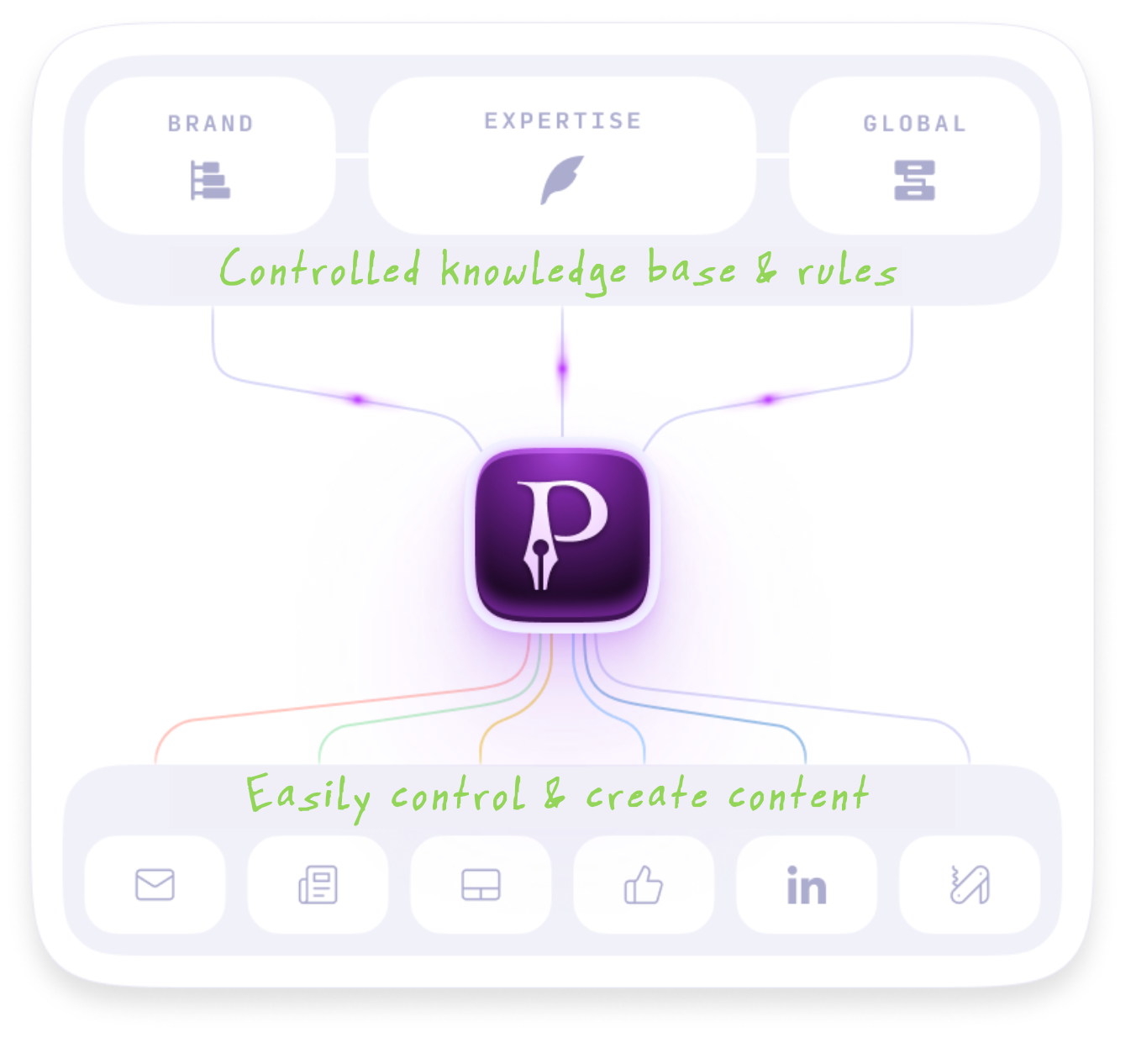
Premise is a content system built around a voice layer. Instead of inferring a brand's voice from samples, it runs every generation through an explicit ruleset: vocabulary decisions, banned constructions, sentence-level habits, and the specific AI tells listed above, defined per brand and shared by every user on the account.
The voice layer sits on top of a knowledge base, so output draws on what the company actually knows and believes, not just how it sounds. Teams work from shared content types (blog posts, emails, one-pagers, each with its own structural rules), and everything generated lands in a common library.
We built it because we ran into this problem ourselves. Prologue develops strategic narratives and messaging for B2B companies, and once that messaging is defined, it has to survive contact with day-to-day content production. Premise is how our clients' teams generate content that stays inside the lines we drew together.
FAQ
Can AI actually match a brand voice?
Does uploading a style guide work?
What's the difference between brand voice and tone?
How is AI brand voice different from AI content governance?
How do you train AI on a brand voice?

AI Is in Your Workflow. Is Your Voice?
Without a voice system, the default is everyone's default. Start building yours with Prologue.